 |
| "Censored" , Brandon Trawick, Charcoal 18'24" 10/12/2012 |
Friday, October 12, 2012

Monday, October 8, 2012
Reading Report - Importance of Critique/Key Questions
Giving critiques is important in the world of art. It gives us an opportunity to improve our artwork when people people give their opinions.
Important key questions that you
should keep in mind when you give a critique are related to composition,
drawing, figure drawing, perspective, and color.
Questions about composition include:

The image is neither crowded nor empty.
Questions about drawing include:
*
Does the value structure create a mood?
Questions about figure drawing
include: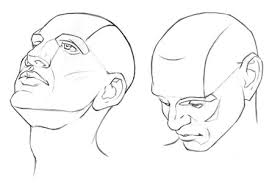 Figure Drawing
The lines of the figure are the same color and value.
* Has the placement of forms on the picture plan been carefully considered?
* Are the sizes of the forms consistent with their position on the picture
plane?

Landscape
The tree on the left makes the
foreground, which makes the composition whole.
Questions about color include:
* Do you have enough colors available to work with, or do you only have a
few colors in your chosen medium?
* Are you considering the texture that result from your color application?
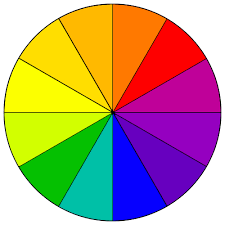
The color wheel
Questions about composition include:
Questions about drawing include:
* Does the value structure create a mood?
Questions about figure drawing include:
Sunday, October 7, 2012

Saturday, October 6, 2012

Sunday, September 30, 2012
Reading Report- Line Variation and Sensitivity
Line is the oldest method of depicting objects in art and it plays a vital role in all types of art.

-->
When you first construct a drawing, your
lines should be light and gestural.
There should not be detail in this stage.

 |
| rough surface with charcoal |
When you draw a line,
first think of your medium
and surface.
Your medium will reflect the
texture of your surface.
 |
| smooth surface with charcoal |
Sensitive Line: Registers minute changes and differences in contour lines. This type of line has three main qualities such as weight, value, and volume.
Light Source (Value): Objects in shadow are depicted as darker and thicker, whereas objects in the light are lighter and more delicate.
Weight: In a drawing where weight is supported or puts pressure on another object, it is emphasized by a dark or heavy line.
Speed of Line (Volume): A line that requires detail will usually be done slowly and will be thick. Lines that need no detail are done quickly and are very light.

^
Dips and Swells: Lines that dip toward the mass of an object (depressions) are darker in value as compared to those that swell away from the mass of an object (projections).

^
Strength of Edges: Contour edges are usually firm and dark in value because it is the depiction of a form meeting with negative space. However, the detail inside the form is light and gestural.

Spatial Sequence: Darker lines appear closer and lighter lines appear further way.
Importance: The focal point of a work of art usually has darker lines.

Straight-Line Construction:
A process where you construct
the curves and contours of a form my converting them into a series of straight
lines that allow you to see where the object overlaps,
shifts, or changes.
A process where you construct
the curves and contours of a form my converting them into a series of straight
lines that allow you to see where the object overlaps,
shifts, or changes.

Planar Construction:
A natural extension of straight line construction and begins with the use of a line. Where there is a shift in value, texture, or form, a shift in plane is indicated. It is sort of like a 3-D version of straight-line construction.
A natural extension of straight line construction and begins with the use of a line. Where there is a shift in value, texture, or form, a shift in plane is indicated. It is sort of like a 3-D version of straight-line construction.
KINDS OF LINES
- Gesture: Lines suggesting basic shapes and proportions.
- Contour: Single line establishing edges.
- Modified Contour: Quicker lines that allow the artist to focus on the subject.
- Cross-Contour: Establishes objects between edges. These lines move from side to side on a plane and depict dips, swells, surface changes, volume, and dimension.
- Classical: A very precise contour line with no interior detail; usually light in value.
- Anatomical: Strongly represents internal muscular or skeletal structure.
- Organizational: Underlying lines that are absorbed into the final work and are not meant to be seen. Simply used as a construction method.
- Structural: Reveals object's structure by depicting it on various planes.
- Mechanical: Kind of like a blueprint in that it remains constant and has no change in size, volume, or value.
- Angular: Develops definition of contours. It is a series of straight lines that interpret a curved edge.
- Decorative: Creates a sense of ease and movement
- Calligraphic: Resembles handwriting.
- Broken/Implied: When there is a gap in a line, but the gap is internally filled in by the viewer.
- Altered: Lines that allow for correction and are smeared or blurred.
- Agitated/Angry: Very Choppy or irregular lines that convey anger.
- Process/Searching: Small, short lines made by the artist to help find true edges.
- Tonal/Dimensional: A combination of various types of lines depending on the artist's response to weight, value, and texture of depicted objects.
 |
| Gesture |
 |
| Broken/Implied |
 |
| Decorative |
 |
| Anatomical |
Sunday, September 23, 2012
Reading Report- The Golden Section
 |
| Golden Rectangle In Natural |
based on the division of space into parts that
correspond to the proportion of 6.18 to 1 or
1 to 6.18. This can also be approximated to
3:5 or 5:8. The 3 in 3:5 and the 5 in 5:8 relates
to the 5 in 3:5 and the 8 in 5:8 as much as the
greater number relates to the sum. (The smallest
and largest number combined.)
The Golden Section can be applied to a 2D plane or a 3D Solid. The Golden Section can be found
in the human body, Latin alphabet, and nature.Vitruvius worked out the golden section in the first century for architectural standards for proportion of columns, rooms, and buildings. Histories greats such as Leonardo da Vinci , Piero Della Francesca and Leon Battista Alberti were aware of the Golden Rectangle and evidence of it is contained in their work.
 |
| Golden Rectangle Use In Art |
 |
| Golden Rectangle Used In Architecture |
Constructing The Golden Section/ Rectangle
 |
| Golden Rectangle w/ Spiral |
- Draw an square
- Cut square in half vertically
- On one half of the square draw a diagonal line to the opposite corner
- Make an arc using that line as a radius
- Extend base line
- Create Perpendicular Line up from meeting point
- Create line to match top of original square
- AND YOUR DONE
Saturday, September 22, 2012


Subscribe to:
Posts (Atom)